-
AutorPostagens
-
-
From Freedom Songs
to Hashtags:
Digital Activism
and the Evolution
of Social Justice
Engagement.
Abstract:
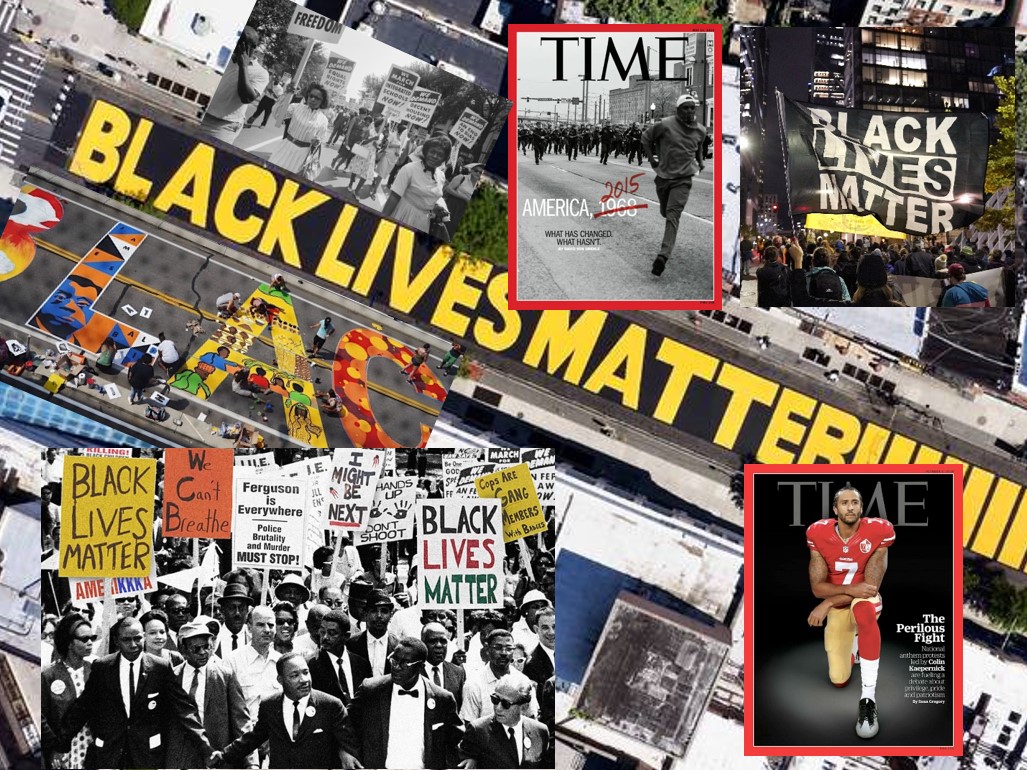
Digital activism has transformed how social justice movements are organized, communicated, and sustained — particularly among Black Gen-Z. Often dismissed as performative or ephemeral, online activism is in fact the latest phase of a long lineage of Black resistance strategies. This article situates digital activism within its historical continuum, examines its contemporary forms and contradictions, and offers practical frameworks for converting online engagement into durable political, economic, and cultural power.
I. Introduction: Activism Did Not Begin Online.
The popular critique of digital activism — “hashtags aren’t real activism” — rests on historical amnesia. Black political engagement has always evolved alongside available technologies. The question has never been whether tools are valid, but how they are used and whether they produce material change.
From oral traditions to print newspapers, from church basements to encrypted group chats, Black activism has consistently adapted to constraints imposed by surveillance, repression, and exclusion. Digital platforms represent not a rupture but a continuation — one that amplifies both possibility and risk.
II. Pre-Digital Black Activism: Organization Without Algorithms.
1. Oral Networks and Informal Communication.
Before mass literacy and telecommunications, Black communities relied on oral storytelling, spirituals and coded songs, trusted messengers, and informal mutual-aid networks. Information moved slowly but strategically. Trust was central. Messages were designed to survive scrutiny.
2. Print Media as Political Infrastructure.
In the late 19th and early 20th centuries, Black-owned newspapers became organizing tools: The Chicago Defender, The Pittsburgh Courier, The Crisis, e.t.c. These publications shaped political consciousness, coordinated migration, and framed narratives ignored by mainstream press. Print was not passive — it was infrastructure.
3. Churches, Unions, and Physical Space.
Civil-rights era activism depended on churches as meeting hubs, labor unions as leverage, universities as intellectual incubators. Organizing required time, discipline, and personal risk. Communication was slow, but commitment was deep.
4. State Surveillance and Repression.
Pre-digital activism faced State infiltration and likely imprisonment. Movements learned operational security, discipline, and strategic silence — lessons still relevant today.
III. The Digital Turn: What Changed—and What Didn’t.
1. Speed, Scale, and Visibility.
Digital platforms introduced instant dissemination, global audiences, decentralized leadership, and low barriers to participation. A smartphone now functions as a printing press, megaphone, and archive. But visibility does not equal power!
2. The Psychological Shift in Engagement.
Digital activism transformed participation from long-term organizing to episodic engagement. Membership to followership Strategy to virality. This lowers entry points but often weakens durability!
3. Black Gen-Z and Platform Fluency.
Black Gen-Z’s understand algorithmic logic intuitively, use memes as political language, blends humor, grief, and critique seamlessly and navigate multiple identities simultaneously. They have expanded what activism looks like — but not always how it wins!
IV. The Limits and Risks of Digital Activism.
1. Performative Solidarity.
Posting without action can create moral complacency; reward optics over outcomes and drain movements of urgency! Visibility becomes a substitute for participation.
2. Activist Burnout.
Black Gen-Z activists face constant exposure to trauma, the pressure to educate others, harassment and doxxing, including emotional labor without support! Burnout is not individual failure — it is structural neglect!
3. Platform Co-optation and Surveillance.
Movements operate on privately owned infrastructure. Consequently digital platforms profit from outrage, moderate unevenly, share data with authorities and shape discourse through algorithms.
V. Practical Frameworks for Effective Digital Activism.
This section offers concrete strategies for transforming digital engagement into sustained impact.
A. Strategic Clarity: Know What You’re Trying to Win.
Every campaign should answer:
- What is the specific demand?
- Who has the power to grant it?
- What pressure changes their incentives?
Viral attention without demands dissipates!
B. Digital-to-Physical Translation.
Effective movements link online action to – Voter registration, Mutual aid, Labor organizing and Policy advocacy! Digital tools should mobilize, not replace, offline action.
C. Distributed Leadership, Not Leaderlessness.
Decentralization is strength only when roles are defined, communication channels are secure, and decision-making is transparent. Movements collapse when everyone speaks and no one organizes.
D. Political Education as Core Infrastructure.
Sustainable activism requires historical grounding, ideological clarity, legal literacy and economic analysis. Education prevents co-optation!
E. Funding and Resource Strategy.
Movements fail without funding and money. Digital activism should normalize transparent fundraising, support movement workers and build independent infrastructure. Liberation cannot be crowdsourced indefinitely.
VI. Digital Wellness as Movement Strategy.
Burned-out activists cannot build durable change. Best practices should include rotating responsibilities, trauma-informed organizing, clear boundaries between content and care and offline restoration periods. Rest is not disengagement — it is sustainability!
VII. Contemporary Case Studies: Hybrid Models of Resistance.
The most effective modern movements use social media for narrative framing, build offline institutions, develop legal and policy arms, and invest in leadership training. They treat digital platforms as tools, not homes.
VIII. The Future of Activism: Beyond the Feed.
Emerging directions include encrypted organizing spaces, worker-owned platforms, cooperative media models, data-literate activism, and AI-aware organizing strategies. The next phase of activism will reward discipline over virality!
IX. Conclusion:
Activism Is a Practice, Not a Performance.
Digital activism did not weaken Black resistance — it exposed its next challenge. Visibility alone cannot substitute for strategy, organization, and sacrifice. Black Gen-Z’s have inherited both a legacy of struggle and unprecedented tools. The task ahead is not to abandon digital activism, but to anchor it in historical wisdom, structural analysis, and long-term commitment. The question is no longer whether social justice can trend — but whether it can endure.
-
@núbio Particularly valuable is the discussion of algorithmic co-optation and surveillance capitalism. This raises a critical question: Black digital activism often relies on infrastructures owned by institutions historically indifferent or hostile to Black liberation.
Digital platforms, while lowering barriers to participation, operate within corporate and state architectures that extract data, commodify outrage, and unevenly moderate political speech.
-
@genztalks Social media and microblogging platforms that are not focused on Black communities, are not neutral. Algorithmic systems prioritize content that drives interaction, which can inadvertently privilege polarizing, or traumatic content. This has implications for activist burnout and public discourse quality.
-
-
AutorPostagens


Você precisa estar logado para responder a este tópico.